The Road Is Not Neutral: Ethics of Access in Remote Regions
Sajid Ali
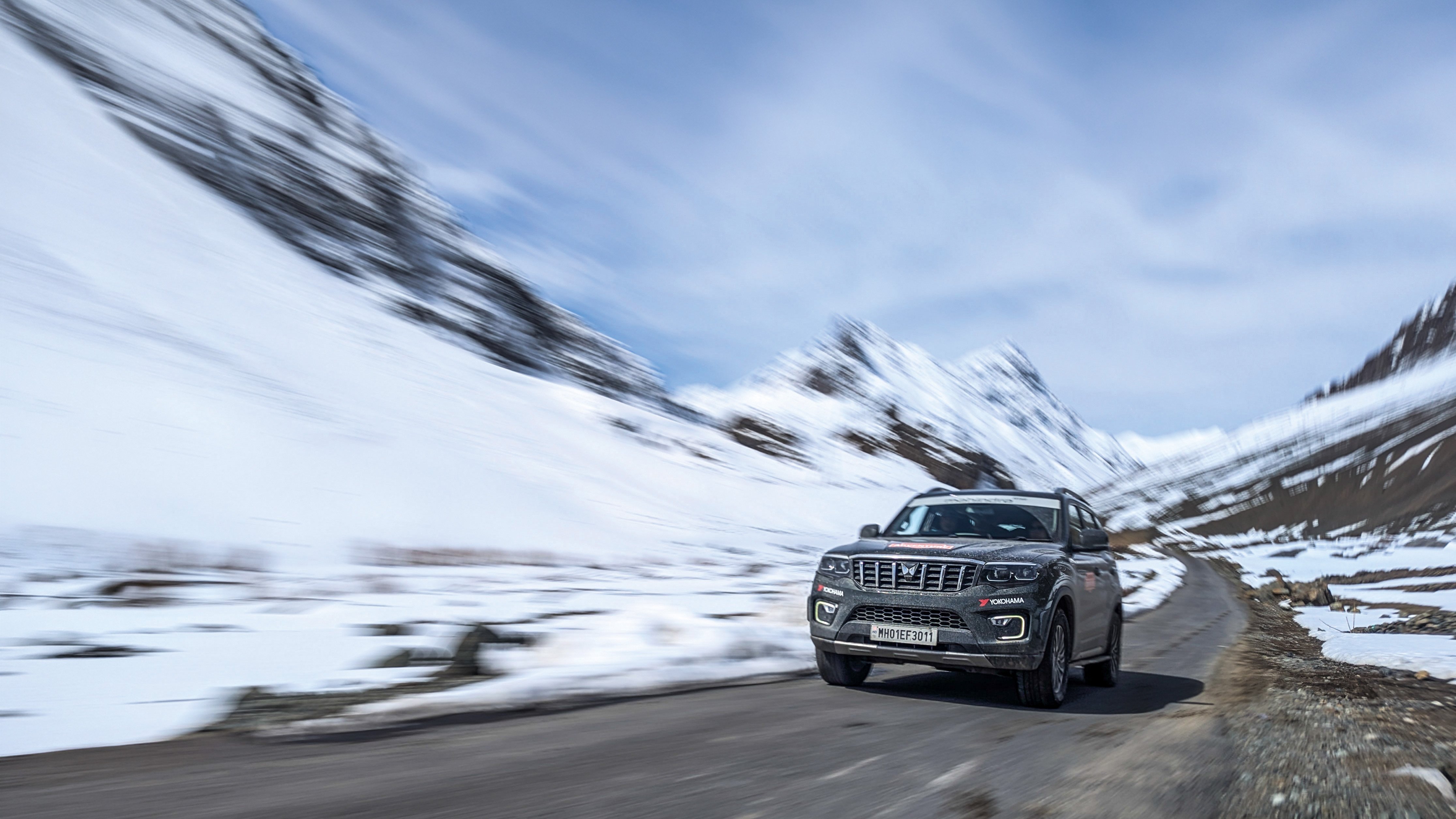
How Lightly Can We Arrive? A Journey into Mushkoh Valley
There was a time when the question around Himalayan travel was simple: How far can we go?
Today, the question feels different.
How lightly can we arrive?
Our journey to Mushkoh Valley, in the Drass region, began like many others, with a plan, a route, and a purpose. We hoped to witness the Himalayan brown bear, a critically endangered species that emerges from hibernation as winter begins to recede. But even before the journey unfolded, another question lingered quietly beneath the surface. Not whether we would reach Mushkoh Valley. But what it meant that we could.
The modern Himalayan journey is defined by access. Roads now cut through terrain that once demanded days of walking. Vehicles can reach valleys that were once remote in the truest sense of the word. What was once an expedition has, in many ways, become a drive.
This access is powerful. It opens up landscapes, brings people closer to places they may never have experienced otherwise, and creates opportunities for connection. But it also changes the nature of those places. And it changes our relationship with them.


Crossing Zoji La on this journey, the mountains reminded us that access is never absolute. Avalanches had struck sections of the pass. Convoys of vehicles were halted. We waited for hours, engines off, watching as the road ahead remained uncertain. In those moments, the illusion of control fades quickly. A road may exist. A vehicle may be capable. But the mountains operate on their own terms. The question is not whether we can go. It is whether we understand where we are going.
By the time we reached Mushkoh Valley, the landscape had opened up into something vast and quiet. Snow lingered across the slopes, broken by patches of exposed earth. The sky shifted constantly, light breaking through clouds, only to be swallowed again. It is the kind of place that does not ask for attention, but demands presence. Mushkoh does not reveal itself easily. And neither does what lives within it.
Our days settled into a rhythm of waiting. Not the passive kind, but the attentive kind. We scanned distant ridgelines through binoculars. We spoke to local residents, children, in particular, who seemed to understand the landscape with an instinctive ease. They pointed us toward slopes where bears had been seen, spoke of recent movement, of patterns that are never written down but always known. Their knowledge came not from observation alone, but from coexistence. And in that, there was a quiet reminder: this was not a place we had come to discover. It was a place others already understood.
Wildlife in regions like Mushkoh does not exist for observation. It exists despite it. The Himalayan brown bear, in particular, lives on the edge of visibility, both geographically and in public awareness. To seek it out is not simply an act of looking. It is an act that carries weight. Because every presence, every vehicle, every movement, every moment of attention, has the potential to disturb what we have come to witness. And yet, this is the paradox of modern travel. We go in search of the wild. But the very act of searching can alter it.
Hours passed without certainty. And then, almost without announcement, there was movement. Far across the slope, barely perceptible at first. Then clearer.
The bear.
It did not feel like a climax. There was no sense of achievement. No urgency to capture or claim the moment. Just a quiet awareness that we were witnessing something that was never meant for us. For a brief time, our presence and its existence overlapped. And then it moved on.
It is easy, in moments like these, to frame the experience as success. A sighting achieved. A journey completed. But that language belongs to a different kind of travel. In places like Mushkoh, the more meaningful question is not what we saw. It is how we were there.
Did we arrive with awareness?
Did we keep our distance?
Did we allow the landscape and the life within it to exist without turning it into spectacle?
The presence of a road changes the equation. It allows more people to come, more frequently, with greater ease. It brings economic opportunity, but also pressure. Noise. Waste. Attention. Over time, these accumulate. Not always dramatically, but steadily. And often, irreversibly.
For those of us who travel into these regions, whether as individuals, storytellers, or through brands, the responsibility is no longer limited to safety or capability. It extends to intent.
Why are we going?
How are we showing up?
And what are we leaving behind, beyond just footprints?
Mobility today makes journeys like Mushkoh possible for families like ours. It allows us to move through landscapes together, to experience distance and scale in ways that were once far less accessible. But capability, on its own, is not enough. Because the future of Himalayan travel will not be defined by how far vehicles can go. It will be defined by how thoughtfully we choose to use them.
On our way back, the mountains did not feel smaller. If anything, they felt larger. Not in scale, but in significance.
The bear, moving quietly across a distant slope, stayed with us, not as a highlight, but as a reminder. That the wild does not exist for our experience. That access is not the same as understanding. And that perhaps the most important shift in how we travel today is this:
Moving from asking how far can we go… to asking how lightly can we arrive.
Because in the end, that may be the difference between simply reaching a place and truly respecting it.


